


Money and you
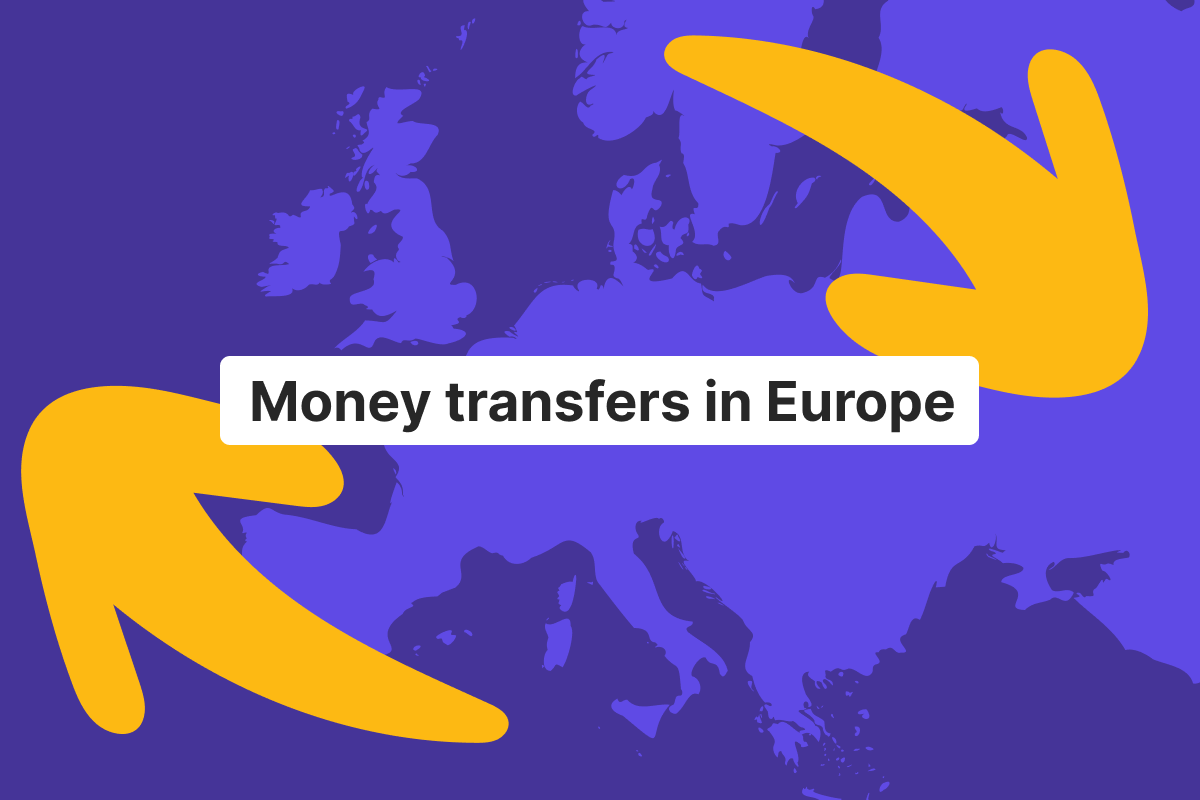
Money transfers in Europe: which option is better?
Imagine a scenario: you’re trying to pay your rent in Berlin or send money to Europe for a birthday gift. While doing it, you see a screen asking if you want to use the “SWIFT” or “SEPA” option. This is where knowing the difference matters, especially if you want to avoid unnecessary fees. Money transfers in Europe can be a complicated subject. Because, despite the EU’s best efforts, the continent is still a patchwork of different “rails.” The Eurozone uses SEPA, the UK relies on its own Faster Payments system, and everything else is often routed through the global SWIFT

Money and you
Open Banking vs. traditional banking for businesses
The choice between Open Banking and traditional banking has become one of the most important decisions in the modern business world. These approaches have different ways of working that affect your cash flow management and handling of financial data. We’ll take a look at how they differ and everything else you need to know. What is traditional banking? It is the way of opening and operating bank accounts that has been around for centuries. This established financial model has dominated global banking for many years, with relatively few changes until recently. Physical branch model One of the most important aspects
Money and you
AI in finance: Benefits, use cases, and trends
Artificial Intelligence (AI) has been introduced into many aspects of our lives, with the finance industry among them. AI in finance can be used in various ways, such as analyzing large amounts of data or automating time-consuming processes. It can also be used to recreate the human-style decision-making process. We’ll look at how financial institutions are now using AI systems to streamline their processes. Find out how AI finance applications are quietly revolutionizing the financial service industry. What is AI in finance? To understand the use of AI in the financial industry, we can look at a few of the
Money and you
Electronic money institution vs bank: key differences explained
An electronic money institution (EMI) is similar to traditional banks in many ways. However, they operate under different legal frameworks that determine how they hold client funds. EMIs focus on enabling easy digital transfers worldwide, while banks use a more traditional approach. Rising fintech adoption and the changing face of global commerce have led to demands for new types of payment institutions and banking services. It is why we are seeing electronic payment services from EMIs becoming ever more popular. Genome operates as a licensed EU electronic money institution EMI. It means that you get a range of e-money options
Money and you
SEPA vs. SWIFT transfers: key differences explained
SEPA (Single Euro Payments Area) is a European payment scheme that enables euro transactions across participating countries, making domestic-style transfers possible across borders. It’s designed for payments in EUR between bank accounts held at a bank in the SEPA zone. It has rules around formats, timelines, and fees, especially for SEPA payments. SWIFT (Society for Worldwide Interbank Financial Telecommunications), by contrast, is a global messaging network used by financial institutions to route payment instructions worldwide. It’s often associated with cross-border wires and correspondent chains, which is why swift payments can involve more intermediaries, variable fees, and less predictable settlement speed.
Money and you
How fintech is closing the finance gap for Italian SMEs
Italian SMEs face a series of new challenges as the financial landscape changes. Their reliance on traditional banks for loans and other services is being put to the test, as the demands of the modern business environment increase. Fintech institutions provide a modern solution to help carry out the digital transformation of the finance SME in the Italian scene. These companies provide faster services and more inclusive access to financial tools, as well as credit options. We’ll be looking at areas like digital landing, what fintech platforms offer, and the future of finance SME in Italy. Find out what a
Money and you
Multi-currency business accounts for Italian SMEs explained
As Italian SMEs try to expand globally, efficient management of international payments has become essential. Businesses operating across borders must handle multiple currencies, manage conversions, and minimize financial friction. Business, however, usually relies on traditional banks: not surprisingly, as Italian financial institutions are literally the oldest in the world. But today, a traditional bank is more associated with hidden fees, delays, and complex procedures for foreign currency accounts or international business accounts. The old bank system has become so large that it’s now more interested in global investments than in serving medium- or small-sized businesses. Modern fintech, on the other
Money and you
What are stablecoins? Everything you need to know
Stablecoins are crypto assets whose values don’t change and that are often tied to the value of real-world assets. It has allowed them to act as a kind of bridge between any fiat currency and cryptocurrencies. While they are digital assets, they maintain a stable value, unlike other crypto assets. This stability has led to them gaining popularity for various types of transactions. Genome is a fintech platform that supports the digital economy. Read on to learn what a stablecoin is and how they are used for cost-effective payments and other purposes. What are stablecoins? Stablecoins are cryptocurrencies that have
Money and you
What is asset tokenization? Benefits, risks, and examples
What is digital asset tokenization, and how can it help make investing easier? Asset tokenization involves the ownership of real-world assets being moved onto the blockchain in the form of digital tokens. It is an increasingly important area of fintech and digital finance that provides several interesting benefits, such as greater transparency, liquidity, and accessibility. Genome provides a platform with secure and compliant financial solutions. Businesses interested in learning how asset tokenization can help will find everything they need to know about digital assets with us in this article. What is asset tokenization? Tokenized assets are digital versions of real-world