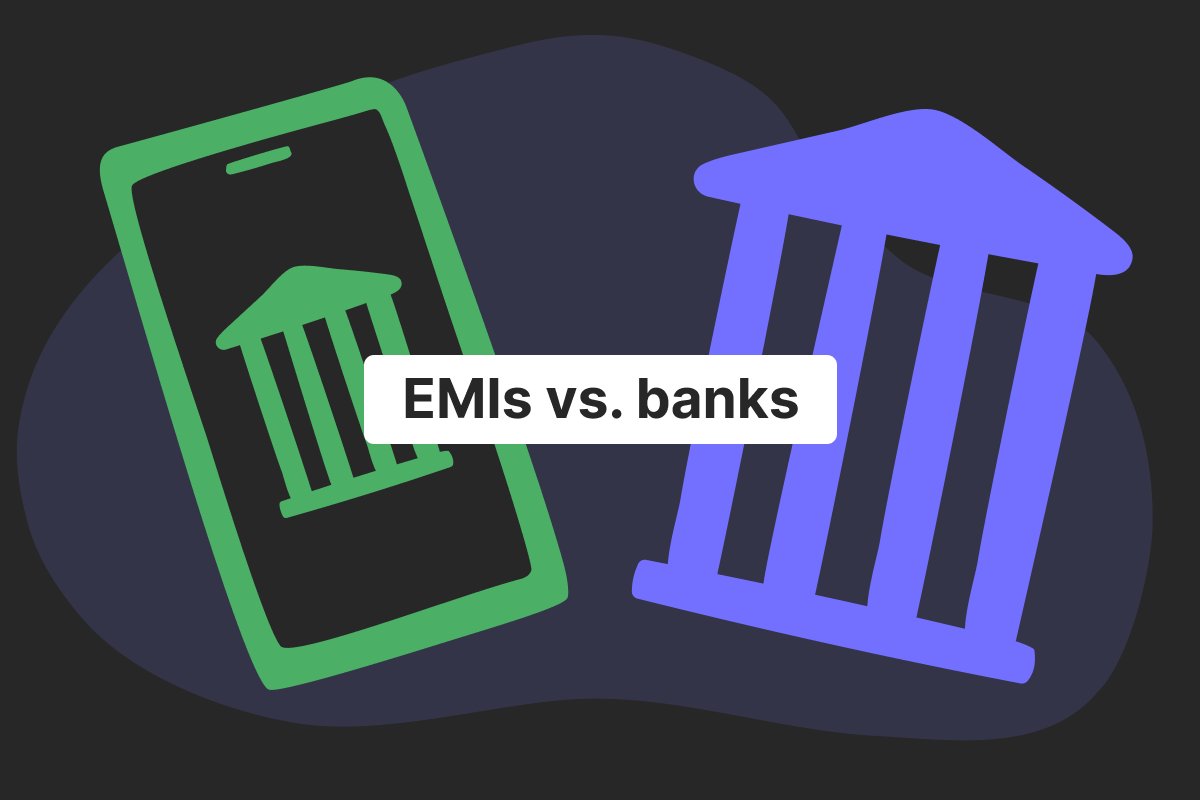


The choice between Open Banking and traditional banking has become one of the most important decisions in the modern business world. These approaches have different ways of working that affect your cash flow management and handling of financial data. We’ll take a look at how they differ and everything else you need to know.
What is traditional banking?
It is the way of opening and operating bank accounts that has been around for centuries. This established financial model has dominated global banking for many years, with relatively few changes until recently.
Physical branch model
One of the most important aspects of the traditional banking system is how transactions are carried out in physical branches. These branches often cover a certain region, meaning that customers have struggled to obtain services locally when not at home.
These banks typically use legacy systems. Meaning that their systems are several decades old, so adding new apps can be difficult or impossible. Legacy systems have another major drawback in that they group transactions into batches rather than process them one by one.
They rely heavily on card-based payments over the major card networks. However, even paying by card doesn’t provide instant settlement. Although the transaction may be improved instantly, the money often doesn’t reach the merchant’s account for several days.
In terms of risk management, physical banks are known to be conservative and risk-averse. They often employ manual verification processes and don’t share their data with other organizations.
What is Open Banking?
Open Banking provides a more modern approach that allows your bank account and financial data to be shared with other apps and financial services.
The Open Banking rules were created by new laws, such as the PSD2 in the EU and the Open Banking Standard. These pieces of legislation were created to ensure that big banks no longer have a monopoly over the customer data they hold.
The idea behind the laws is that it’s customers who own their financial data, rather than the financial institutions that they deal with. It means that the banks need to share customer data when requested. The Open Banking framework ensures that this is done securely.
The security aspect is covered by the fact that you never need to share your password when authorizing third-party providers. Instead, you just need to provide permission for the financial data that you want to share.
APIs (application programming Interfaces) are used to make this work. They are a secure method for passing consumer data between a bank and another app. Open Banking APIs are essentially a way for computers to securely and quickly exchange information.
Open Banking also allows us to make seamless account-to-account payments with no middlemen or cards needed. When someone wants to make financial transactions, such as paying for goods, the money moves directly from the customer’s bank account to the merchant. It works out faster and cheaper than making card payments.
Key differences between Open Banking and traditional banking
We’ve shown so far that traditional banking is a closed approach, while Open Banking allows the easy sharing of information between financial institutions. This difference becomes clearer when we look at the key elements.
Payment rails. In traditional banking, payment processes involve card networks or batch systems like ACH. It means that intermediaries are involved. With Open Banking, it’s a direct approach in which money is sent from one account to another.
Security architecture. The closed approach taken by traditional financial institutions means unique usernames and passwords are held with each bank. It means sharing financial data is risky. The way that Open Banking works with bank-level APIs ensures that data can be shared safely once the user completes the verification process.
Instant payments vs settlement times. The important difference here is that traditional card payments aren’t settled right away. However, Open Banking payment details are settled right away.
User experience. There’s no doubt that Open Banking enables a more connected digital banking ecosystem. It is a way to connect the financial world and make it easier to manage. There is no longer any need to enter long card numbers when making purchases.
Cost. The cost merchants pay to accept card transactions is one of the major differences we’re now seeing in the financial industry. Digital banking with APIs means a direct cost saving in this respect.
Regulatory model. There is no problem with regulations, since the Open Banking approach is legal and banks are legally obliged to share customer data in this way.
Open an account
in Genome online
Benefits of Open Banking
The innovative services provided by the financial sector through Open Banking have led to a range of benefits felt directly by customers and merchants.
Faster payments
It is the most noticeable aspect for merchants. They no longer need to wait for card payments to settle. Instead, the payment experience is direct and instant.
Lower fees
The lack of intermediaries in other payment methods means costs are lower with Open Banking transfers.
More transparency
As Open Banking evolves, we can see that it offers secure access without infringing data protection laws. The transparency it offers means that greater service availability can be enjoyed by consumers.
Better integrations
The ability to add new integrations is another one of the major benefits. It is part of a financial ecosystem, which means that fintech companies and third-party providers can integrate financial services smoothly.
Easier reconciliation
When using Open Banking APIs to receive payments, reconciliations are fast and automatic. Real-time transaction data synchronization means more operational efficiency and less time wasted.
Fewer intermediaries
Using an Open Banking service means direct contact between two accounts. It increases payment success rates and means lower transaction costs, too.
Limitations of traditional banking
Traditional banks using legacy infrastructure face certain limitations that they usually can’t overcome.
Longer settlement. Traditional payment methods can take several days to transfer funds from one account to another, which may affect business cash flow.
Expensive cards. The need to use cards makes the customer experience more awkward and increases merchants’ costs.
Slower innovation. It’s difficult for tech companies to add new payment services to legacy infrastructure, meaning that business operations and account management have changed little.
Lower transparency. These banks are designed to use their own financial technology that doesn’t share data with other financial institutions.
High card processing fees. Traditional payment services and financial products typically require manual intervention and incur higher processing fees.
Which is more secure?
Open Banking is widely considered to be the most secure approach for financial accounts. It protects data security and safety through strong customer authentication (SCA), such as biometric authentication.
The Open Banking regulations are backed by the Payment Services Directive (PSD2), which provides them with a solid legal basis and clear regulatory requirements.
On the other hand, the financial information linked to physical cards has been a weak point in the past. The need to rely on physical cards has led to large amounts of financial fraud.
Which is better for businesses?
Businesses need to consider all relevant information to decide which approach best suits them. It also involves considerations about the type of business.
Ecommerce. The Pay by Bank payment option allows for fast payment and settlement without any fuss.
Fintech. Open Banking is used to gather the financial information needed to make good decisions and enhance the customer experience. Looking at your transaction history enables banks to see what other financial services they can offer you.
Travel. Customers paying for travel services and then cancelling have always been an issue in the travel industry. By using Open Banking, there is no risk of chargeback fraud being used.
SaaS. The use of Open Banking for recurring payments helps deal with the issue of passive churn, which is often a problem with the direct debit method.
B2B payments. The large sums and complexity often seen in this sector are ideal for online banking solutions and modern financial management tools. Using digital payment processes reduces the risk of error and makes reconciliation easier in terms of bill payments.
Open an account
in Genome online
How Genome supports Open Banking payments
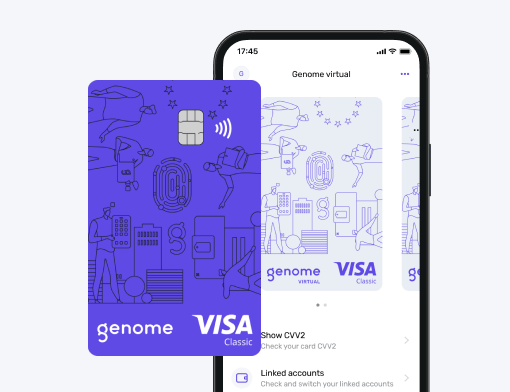
As an electronic money institution, Genome uses Open Banking rails and supports account-to-account payments. Merchants can use our instant bank payments to receive SEPA Instant/Credit Transfers from customers who use the Pay by Bank payment method. You can manage accounts and make transfers directly from your mobile device.
When you open a business account with us, you no longer need to rely on old-fashioned card processors for one-off payments and recurring payments. As an alternative to traditional banks for modern payments, we offer a dedicated IBAN account that you can use to make SEPA transfers, start merchant accounts with hosted payment pages, and card processing coming soon as well.