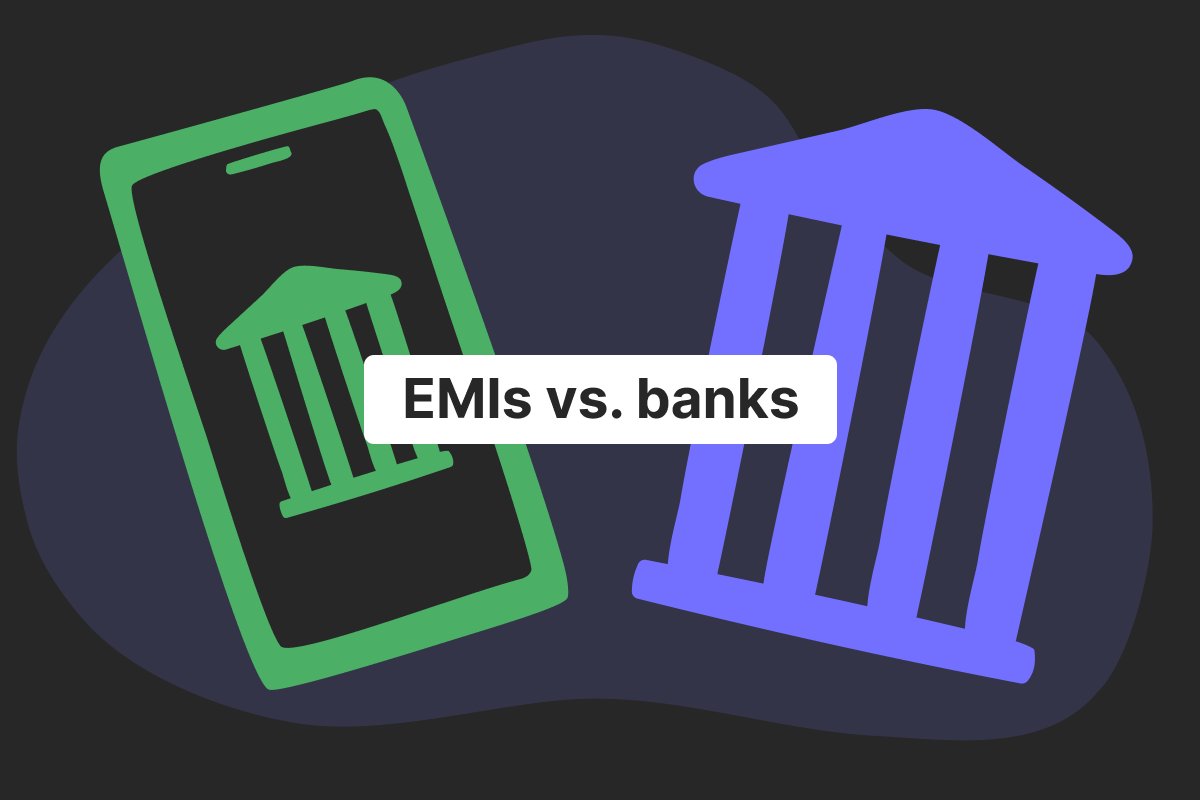
An electronic money institution (EMI) is similar to traditional banks in many ways. However, they operate under different legal frameworks that determine how they hold client funds. EMIs focus on enabling easy digital transfers worldwide, while banks use a more traditional approach.
Rising fintech adoption and the changing face of global commerce have led to demands for new types of payment institutions and banking services. It is why we are seeing electronic payment services from EMIs becoming ever more popular.
Genome operates as a licensed EU electronic money institution EMI. It means that you get a range of e-money options and financial management tools conveniently.
What is an electronic money institution (EMI)?
These are regulated financial institutions that need to obtain an e-money license to operate. They carry out e-money issuance through transfers like cross-border transfers and other financial transactions.
They can provide business accounts and IBANs, together with other payment services such as payment processing and physical or virtual cards. However, they can’t issue personal or business loans, mortgages, or other types of credit.
It is a digital-first approach that fits the modern business world. It’s more agile, allowing them to provide payment services round the clock using mobile banking or a web platform. Faster onboarding is another benefit, with the strict process for traditional banking activities eased to make it easier to send and transfer money speedily.
What is a bank?
It is a fully licensed financial institution. They work with more traditional processes and need a banking licence from the financial authorities or central banks.
These institutions can hold customer funds and also lend money, along with other financial services. It means they offer a wider range of products, including lines of credit, mortgages, and credit cards.
Banks need to stick to stricter regulatory frameworks. However, their onboarding processes tend to be slower. They also have more bureaucracy than an e-money institution, which can make it difficult for businesses that need a fast start.
EMI vs. bank: key differences
We can see the differences between an EMI and traditional banks more clearly by looking at this table.
Feature | Electronic Money Institutions | Traditional banks |
Type of license | An EMI e money license provides consumer protection. No full banking license is needed. | They need a full banking license to operate. This usually makes them part of a financial services compensation scheme. |
How can they hold customer funds? | Need to be safeguarded and can’t be used for lending purposes. | They can lend customer funds to others. |
Onboarding speed | Fast and agile online process. Carried out online. | A traditional bank depends on a slower process, typically carried out in person. |
Range of services | Payments, IBANs, payment cards. | Full range of financial services, such as loans and savings accounts. |
Loans and other types of credit | Not available. | Yes. |
Digital-first approach | Yes. | Not always. |
Worldwide transfers | Fast and usually low-cost. E money funds can be easily held in different currencies and transferred between them as necessary. | Often slower and at a higher cost. |
Fees | Lower, with a transparent approach. | May be higher and with a more complicated set of fees. |
Open an account
in Genome online
Benefits of using an electronic money institution
When deciding whether to use an EMI that can issue electronic money transfers. There are some clear advantages to consider.
Faster onboarding process
Using a fully digital KYC/KYB approach lets you get started quickly while complying with anti-money laundering laws. You can then start accepting deposits and making payments with your own funds.
Multi-currency accounts are available
If you deal with companies across different countries, the ability to use different currencies in your payment account details is a major benefit.
SEPA Instant payments
It is another major benefit for EU businesses that want to send transfers instantly – with SEPA Instant Transfers. There is no need to rely on limited operating hours or slower processes when the digital payments sector is booming.
Business IBANs
This approach with dedicated IBANs for businesses allows smooth international payments with lower fees. Foreign exchange issues are made easier when you can accept payments in your chosen currencies and choose when to change into another currency. EMIs offer competitive exchange rates to make it easy to switch between currencies.
Powerful web & mobile dashboards
Stay in control of your international transactions and spending by looking at all the important information on your dashboard. If the EMI has a mobile banking app, like Genome – all the better!
Better automation and API options
A broader range of online tools helps you control your account and also meet reporting obligations.
Ideal for startups
The EMI method is particularly suitable for SMEs and cross-border companies that need a flexible banking approach that grows with them. In terms of EMI vs bank accounts, the way that banks operate may not always suit a forward-thinking digital startup.
Benefits of using a traditional bank
A traditional bank account offers alternative benefits to consider when evaluating an electronic money institution vs. a bank account.
These include access to credit and lending. The option to offer other financial products, like loans, may be useful.
The presence of physical branches offers another potential advantage. While most transactions can now be carried out online, the presence of physical branches is another factor to consider.
Many traditional banks have been around for many years and have built a strong reputation over that time. They are also suitable for large enterprises with complex financial needs. These institutions with a full banking license offer additional services that larger businesses may need.
When should a business choose an EMI?
There are several compelling reasons to choose an EMI. The following are key situations where this type of account can be extremely useful.
Online businesses. Any company that does most of its business online will want to be able to conduct its banking in this way as well. Virtual payments and online transfers are among the key points. Take a look at what an instant bank payment is and how to use them safely.
International e-commerce companies. Being able to receive customer deposits from across the world is one of the keys to global business.
Startups and SMEs. When considering an EMI vs. a traditional bank account, these companies might prefer a digital-first approach that fits their needs and way of working. Mobile payment options and other modern approaches are ideal for startups that want convenience and speed without sacrificing security.
Companies that need fast onboarding. The chance to open an account and start using the payment systems right away is a huge benefit.
Remote teams and digital-first operations. If you have a business plan that involves people working in different locations, you will want to have a banking solution that fits this approach.
High-volume SEPA or cross-border payments. Sending a lot of high-value cross-border payments can be more expensive and time-consuming with a traditional bank. Lower transaction fees and faster transfers with an EMI will help you to make these payments more easily and with lower international transfer charges.
Businesses want cost-effective FX. An EMI’s currency exchange solution enables easy transactions at lower fees and competitive exchange rates.
Open an account
in Genome online
When should a business choose a bank?
The following are several situations where a traditional bank may be a solid choice.
Companies that need lines of credit or loans. Since EMIs can’t offer these products, visiting a traditional bank with a full range of loan products may be necessary.
Real estate and capital-heavy industries. The complexity of this type of company means that they may prefer the bank approach.
Businesses requiring treasury services. This type of large business may also need the loans, investment products, and other services that only a major bank can offer. This may involve higher maintenance fees that are worthwhile for the business.
Entities requiring physical branch services. The ability to do everything online is generally an advantage, but some companies may prefer the option of visiting a local branch to carry out some transactions.
How Genome works as an Electronic Money Institution
Genome is an EMI licenced and supervised by the Bank of Lithuania, which provides dedicated IBANs for businesses. It helps companies that want to carry out SEPA transfers and other international transfers effortlessly online.
With a multi-currency account, it’s possible for businesses to receive international transactions in the currencies that suit them. Another option arrives with corporate Visa cards, which allow your team to make purchases and bill payments conveniently. Choose a corporate virtual card or a corporate physical card to suit your needs.
A merchant account and instant bank payments help keep the cash flow under control. It allows customers to pay for their purchases securely and without any delay. An API-based payment automation allows simple integration that inspires confidence.
With advanced fraud prevention included, you can be sure that you meet the strict regulations that are currently in force. We protect customer funds while ensuring your transactions comply with the latest regulations.