If you go to the small business or e-commerce forums, you will see the common question threads over and over again:
“My funds were frozen for 120 days with no explanation.” “I’m paying 3.5% in fees – is this normal?” “Do I really need a separate gateway and a bank account?”
To the customer, hitting “Pay” is nothing special. But for you, the merchant, card payment processing is often a black box. You build a business, you make sales, and then you wait for the acquiring bank to deposit the money.
The reality is that traditional banking is complex. In some cases, you need three separate contracts at the bank: one for your business bank account or merchant account, one for a gateway to secure the data, and another for the processor to actually move the money.
Modern solutions from a payment service provider (PSP) platform, like Genome EMI (electronic money institution), simplify the process. They are built differently, so you don’t have to wonder, “Can I accept credit card payments from this country/on this occasion, or not?”
But modern digital financial solutions have their own specific challenges, especially with high-risk merchant clients.
We are going to break down how the money moves and how modern payment service provider (PSP) platforms could be the way to go if you need to accept payments.
Open an account
in Genome online
How card processing works (the 4-step cycle)
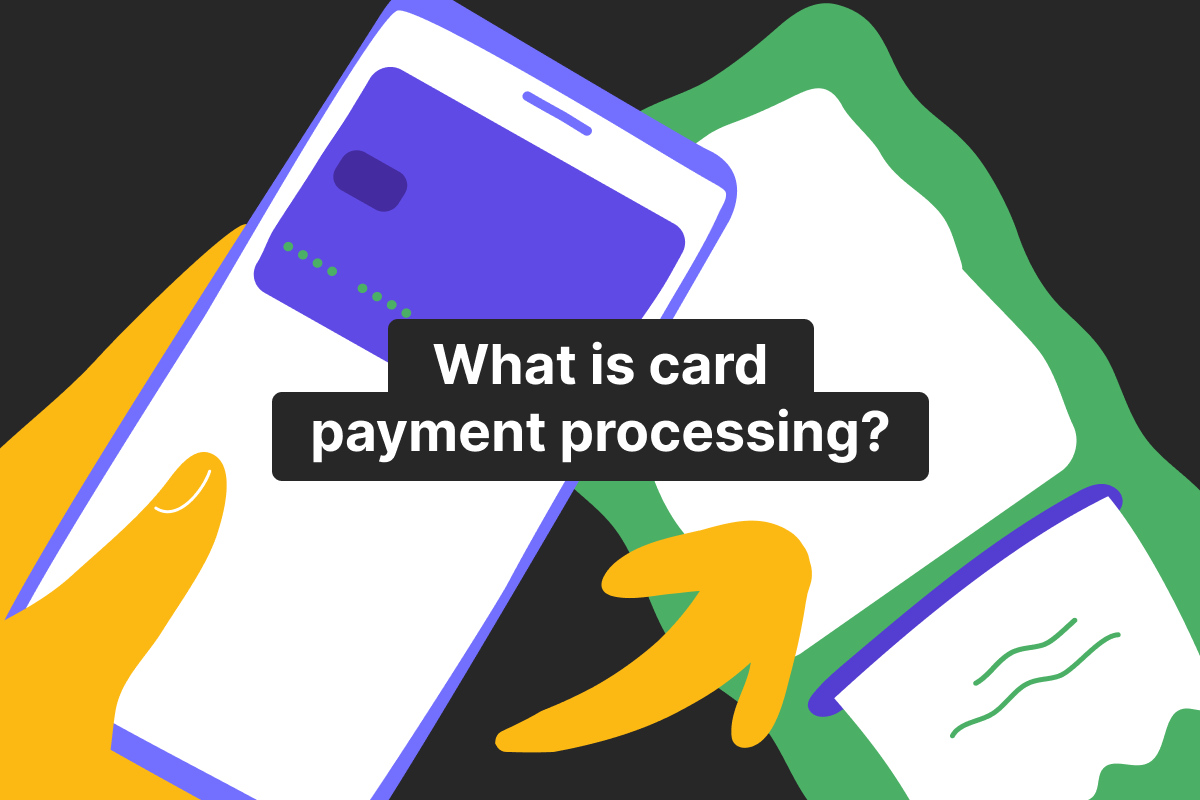
Most people think money is transferred instantly from a credit card/debit card to a bank account. Or at least it moves “somewhere to the bank, then to deposit.” In reality, the process involves many steps. Understanding this cycle will allow you to better understand why your fees for payment processing are what they are.
Authorization: the “Can they pay?” check
When a customer attempts to buy something on your website, the acquiring bank or payment service provider (PSP) must decide whether to accept credit card payments / debit cards.
When the card details are entered, your payment gateway sends the data securely to the acquirer (your bank’s processor). The acquirer then asks the card network (Visa/Mastercard) to contact the customer’s bank (the Issuer).
This is called authorization. Your system pings the customer’s bank (the Issuer) to ask: “Does this person have $100, and is this transaction suspicious?”
Behind the scenes: This process happens in milliseconds. If it fails here, you lose the sale. This is why having a reliable gateway is non-negotiable.
Batching: the digital stack
Many merchants assume that once a transaction is authorized, the money is instantly wired to them. Not quite. Authorization only approves the charge (often placing a temporary hold). The funds move later. Captured transactions are usually grouped in a “batch” and submitted for clearing/settlement.
The money is stacked up together. Your payment provider (acquirer/processor) sends this batch to the card network (Visa/Mastercard) for clearing, typically on a scheduled cutoff (often daily, sometimes more than once a day).
Behind the scenes: Many setups auto-close batches at a provider-defined cutoff time (not always midnight). If you don’t capture and submit transactions (or the batch doesn’t close in systems that require it), settlement and payout won’t start.
Clearing: the calculator
Overnight, the card networks (Visa/Mastercard) look at your batch. They calculate the payments due. The networks take fees for their services, the issuing bank takes theirs (interchange fees), and they figure out the net amount.
Settlement: the deposit
This is the final step where the money actually lands in your merchant account. The issuing bank sends the funds to the acquiring bank, which then deposits the net amount (sales minus fees) into your merchant account. Depending on your provider, this can happen the next day or take up to 3 business days.
To summarize it, when a customer decides to accept credit card payments or debit cards on your site, a four-step process kicks off instantly.
The card payment processing scheme looks something like this: Customer -> Gateway -> Acquirer -> Card network -> Issuer -> Merchant.
The “hidden” players: payment gateway vs. processor vs. merchant account
This is the section where most business owners get confused. Do you really need three different services just to get paid, including a payment gateway? Let’s break down the definitions.
What is a payment gateway?
Think of the payment gateway as the digital version of the physical credit or debit card machine (POS terminal) you see in a grocery store. Its primary job is security and encryption. It takes the sensitive debit or credit card numbers from your website, scrambles them so hackers can’t read them, and safely delivers them to the processor.
If you are an e-commerce business, you need a payment gateway.
What is a merchant account?
A merchant account is a special type of bank account that acts as a holding tank. When a customer pays you, the money doesn’t go straight to your personal checking account or your standard business operating account. It sits in the merchant account first. Why? Because there is always a risk that the customer might demand a refund, or that the transaction was fraudulent. The merchant account allows the bank to verify everything is correct before releasing the funds to you.
This is one of the common reasons why a new business faces frozen account problems – you should not mix your merchant practice and official (for tax authorities) business accounts. Open a merchant account or even a multi-currency merchant account, and you will be set up for years to work with.
Open an account
in Genome online
Do you need separate providers for each?
In the “old days” of banking, the answer was yes. You would go to a gateway provider for the software, and then go to a bank for the merchant account.
Today, that is rarely necessary. A modern payment service provider (PSP) usually bundles these services. They act as the gateway, the processor, and the merchant account provider all in one.
This reduces the number of contracts you need to sign and usually gives you a single dashboard to view all your sales data.
Understanding the costs: interchange and fees
Many merchants blame their payment provider for high fees, but the processor often keeps a smaller slice of the pie. A large share of the cost comes from interchange and scheme/network fees.
Interchange fees
The “interchange” is the fee the customer’s bank receives (paid by the merchant’s acquirer/processor) to process a card payment.
A common misconception is that the payment processor keeps the majority of the transaction fees.
In reality, the largest share of every card payment often goes to the card issuer – the customer’s bank – through a process called interchange.
Interchange is:
Set by the card networks (e.g., Visa, Mastercard) and paid to the issuing bank.
Typically not negotiable for the processor or the merchant (though merchants can influence costs via card mix, regions, and acceptance setup).
This is why merchants often notice that two transactions of the same value can produce different fees. The payment provider is not arbitrarily changing pricing – the underlying interchange structure is different.
In practice, many growing businesses run into this when they expand internationally or start accepting premium rewards cards, which naturally carry higher interchange rates in many markets.
Could it be avoided? In some cases – yes. Account-to-account payments (often via Open Banking), including EUR transfers over SEPA / SEPA Instant, can bypass card schemes and their interchange/scheme fees (though A2A may still have bank/PSP fees).
Pricing models: flat rate vs. interchange++
When choosing a partner for card payment processing, you will usually see two pricing models:
Flat rate: You pay a predictable percentage (rates vary widely by region, channel, and card type; often plus a fixed per-transaction fee). Some providers use blended tiers, so it may not be truly “one rate regardless of card.” This is simple and great for small businesses, but you can overpay on low-cost debit transactions. On the bright side, you always know exactly what a transaction will cost (e.g., 1.5% + €0.10)
Interchange++: This is the transparent model used by scalable solutions. You pay the exact interchange cost (which varies) plus scheme/network fees and a small, fixed markup for the processor. In Europe, interchange fees for EEA consumer debit cards are capped at 0.2% and credit cards at 0.3%, but commercial cards and some cross-border cases can be higher.
The pricing model is not always a matter of choice. Businesses in high-risk industries are often priced higher and may face stricter approval, reserves, or holds, and many providers simply refuse to work with them due to chargebacks. Other processors provide a high-risk merchant account type, which costs more but can handle everything and is designed for merchants with high-chargeback rates.
Why modern merchants choose Genome finance services for processing
For many digital businesses, the challenge is no longer whether to accept credit card payments (or debit card payments), but how to do so without stitching together multiple vendors, contracts, and technical integrations.
Traditional setups often require a separate acquiring bank, a gateway provider, and additional tools for fraud, reconciliation, and reporting. We can offer today’s industry standard – a unified platform for business.
The all-in-one solution
Genome is a one-stop shop for online businesses when it comes to merchant solutions. You get a dedicated merchant account, a hosted payment page, a host-to-host payment page (coming soon), and acquiring services in one place.
It means you have one login to check your balance, track incoming payments, and analyze your sales data. It simplifies the administrative burden significantly.
Online onboarding
If you have ever tried to open a traditional merchant account with a legacy bank, you know it involves stacks of paper and weeks of waiting.
Online onboarding is a major differentiator for fintechs. With Genome, the process is digital-first, allowing you to submit documents and get approved much faster, so you can start selling sooner.
Multi-currency support
The internet has no borders, but banks do. If you sell to customers in Europe, the US, and the UK, you don’t want to lose money to constant currency conversions. Genome finance services offer a multi-currency merchant account.
You can accept card payments (coming soon) in EUR, USD, GBP, and hold those funds in that currency using a single Genome wallet. Additionally, our multi-currency accounts allow you to hold 12 currencies in total: EUR, USD, GBP, PLN, CHF, JPY, CAD, CZK, HUF, SEK, AUD, and DKK. Exchange funds between your accounts with ease and use them for business expenses.
Additionally, we offer instant bank payments as one more payment method for merchants. Thanks to Open Banking integration, our instant bank payments let your customers pay directly from their bank accounts using SEPA Instant and Credit Transfers. This way, you always have an additional method of payment for customers to use, reducing the cases of payment failure.
Enhanced security
For any business, but especially a high-risk merchant (such as travel, iGaming, or digital goods), fraud is a constant threat. Genome offers advanced risk management tools. It can perform real-time fraud analysis to stop fraudulent transactions before they occur, reducing your exposure to disputes.
Open an account
in Genome online
Security essentials: PCI DSS and fraud prevention
Speaking of security, there are two terms you cannot ignore when setting up your card payment processing.
What is PCI DSS compliance?
PCI DSS stands for Payment Card Industry Data Security Standard. PCI DSS compliance is a set of rules that requires all companies that accept, process, store, or transmit credit card information to maintain a secure environment.
If you handle card data yourself, the compliance requirements are incredibly strict and expensive. However, by using a payment service provider (PSP) like Genome, you offload the vast majority of this burden. To do that, you need to integrate our hosted payment page, and our team will handle the rest, as Genome is PCI DSS compliant.
3D Secure 2.0
Have you ever tried to buy something online and received a text message code from your bank to verify the purchase? That is 3D Secure.
Version 2.0 is the modern standard. It enables “frictionless” authentication, where the bank uses data (device ID, location, history) to verify the user without prompting for a password.
For merchants, this is vital because it shifts the liability for chargebacks (fraud disputes) away from you and onto the bank. If a transaction is verified via 3D Secure, you are generally protected if the customer later claims they didn’t make the purchase.
Conclusion
Card payment processing is crucial for businesses, but it shouldn’t be the thing that keeps you up at night. The days of needing a separate gateway, bank account, and processor are fading.
Genome’s merchant services offer the best tools you can get – all in one merchant account with multicurrency support (EUR, USD, GBP), which will allow you to accept card payments* from clients globally (via Visa, Mastercard). And our instant bank payments allow you to accept payments via SEPA transfers, so you always have a payment alternative!
*Card payment processing feature is coming soon.