

Getting an online shopper from discovery to your checkout page takes real effort. You have spent time, budget, and creative energy building an intuitive website, marketing your inventory, and earning the visitor’s trust. Yet studies consistently show that nearly 70% of online shopping carts are abandoned before completion. A major culprit behind this friction is a checkout that fails to offer the shopper’s preferred way to pay.
Debit and credit cards have long been a familiar way to pay online. Now, alternative payment methods give shoppers more choice. One option is Pay by Bank, which lets customers pay directly from their bank accounts.
What does this mean for your online business? Should you keep card payments, offer bank transfers, or let customers choose between the two? We’ll explain how each option works, compare the benefits and drawbacks, and look at why offering both can make sense.
The enduring power of traditional card payments
Debit and credit cards are a familiar way to pay online, as most people own them. Networks such as Visa and Mastercard let businesses accept payments from customers around the world.
The benefits of accepting cards
Familiarity and trust: Many shoppers already use cards for everyday purchases and know what to do at checkout. This can help them feel comfortable buying from your store for the first time.
Global reach: Cards make it easier to sell abroad. Customers in the UK, Germany, or the US can pay through the same card networks.
Rewards and credit access: Some credit cards offer cashback, discounts, or travel points. Customers may choose them for larger purchases to earn rewards or spread the cost, depending on their card terms.
Open an account
in Genome online
The challenges of card processing
Transaction costs: Each card payment can involve several providers, including the issuing bank, acquiring bank, card network, and payment gateway. Because of this, fees for their services accumulate, which can negatively impact the company’s budget.
Chargebacks: Customers can dispute card transactions. Some disputes involve friendly fraud, where a customer challenges a purchase they actually made—for example, by claiming they did not authorize it or receive the goods. Responding to chargebacks takes time and supporting documents, and some providers charge fees even if you win the dispute.
Extra checkout steps: Strong customer authentication, often handled through 3D Secure 2 (3DS2), helps protect card payments. But when shoppers need to confirm a payment, a delayed SMS or failed banking notification can prevent them from finishing their purchase. Not all people like waiting, so they can rethink the purchase altogether. This leads to cart abandonment.
Failed payments: Unfortunately, customer payments can also fail: cards expire, get lost, or are replaced. Banks may also decline payments after fraud checks. These failures can interrupt sales and recurring subscription payments, even when customers want to pay.
The rise of Pay by Bank and Open Banking
Pay by Bank – also known as account-to-account (A2A) payments – bypasses card networks entirely. Created with the help of Open Banking tools and operating under Europe’s PSD2 framework, this method allows shoppers to make payments directly from their personal bank accounts to your business merchant account.
The buyer selects their bank and opens their banking app to confirm the payment with Face ID or a fingerprint, without entering card details.
The benefits of Pay by Bank
Substantially lower processing costs: By cutting out card network intermediaries and eliminating interchange markups, Pay by Bank significantly reduces your ongoing payment processing expenses. You keep a much healthier portion of every checkout total.
Faster access to your money: Card payments can take days to settle. Pay by Bank payments sent through SEPA Instant Transfers can reach your account in seconds, so you can use the money sooner.
No card chargebacks: Customers approve Pay by Bank payments through their bank. These transfers do not follow card chargeback rules, reducing your exposure to friendly fraud through card disputes.
Friction-free mobile checkout: Entering card numbers on a smartphone can be cumbersome. Pay by Bank allows a shopper to authenticate an order in seconds using native biometric verification, creating an exceptionally smooth mobile shopping experience.
The challenges of Pay by Bank
Regional adoption variations: While direct bank payments are the market standard in countries like the Netherlands (iDEAL) or Poland (Blik), adoption is still growing in other European markets. Some consumers remain hesitant when encountering an unfamiliar checkout option.
Lack of consumer credit: Unlike credit card purchases, Pay by Bank requires the buyer to have sufficient cleared funds available in their bank account right at the time of purchase.
Cards vs. Pay by Bank: direct head-to-head comparison
Here’s how the two options compare for your checkout:
Transaction costs: Pay by Bank avoids card interchange and scheme fees, which can make it cheaper to accept. Your actual costs depend on your provider’s pricing.
Settlement speed: Pay by Bank can get money into your business account in seconds when instant transfers are supported. Card payouts commonly take one to three business days, depending on your agreement.
Disputes and fraud: Pay by Bank payments are approved through the customer’s bank and do not follow card chargeback rules. This reduces exposure to card disputes, though fraud can still occur.
Customer habits: Card payments are familiar to shoppers worldwide. Customers may also prefer credit cards to earn rewards or spread the cost of a purchase.
Open an account
in Genome online
The dual-rail payment strategy: why your business needs both
You can offer both cards and bank payments at checkout. A dual-rail payment strategy gives customers more choice and lets you use each method where it works best:
Give customers a choice: Shoppers who prefer paying through their banking app can use Pay by Bank. Others can use a familiar card or earn rewards on their purchase.
Manage payment costs: Encouraging bank payments for larger purchases may help lower processing costs, depending on your provider’s fees.
Help shoppers complete their purchases: When customers can use a payment method they trust, they may be less likely to leave checkout. Offering both can help reduce cart abandonment.
Build your payment infrastructure with Genome
At Genome, our mission is to provide growing businesses with flexible, transparent financial tools. We know that managing customer checkout flows, daily operations, and cash flow should be seamless.
Merchants can already integrate Genome’s Pay by Bank solution, instant bank payments, to accept fast, secure, and low-cost direct bank transfers across Europe. Both SEPA Instant and Credit Transfers are available.
Even better: Genome’s dedicated card payment processing is launching soon! It will allow you to accept Mastercard and Visa card payments. Once live, you will be able to manage your complete dual-rail payment strategy directly from a single financial dashboard.
Beyond payment acceptance, Genome serves as your complete business finance engine:
Open a multi-currency business account and store funds in 12 currencies: EUR, USD, GBP, PLN, CHF, JPY, CAD, CZK, HUF, SEK, AUD, and DKK.
Make European and international business payments with both SEPA and SWIFT transfers available.
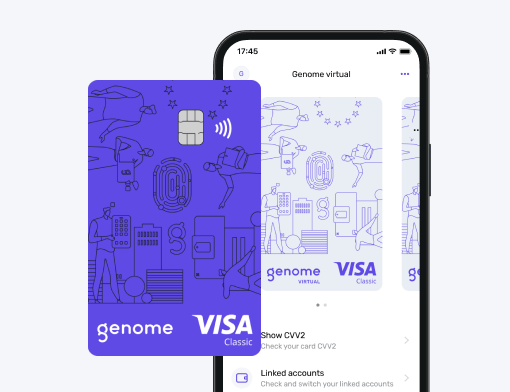
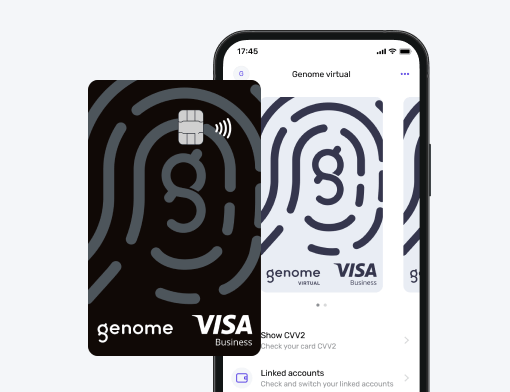
Issue corporate Visa cards for straightforward team expense tracking.
Ready to prepare your checkout for the next generation of commerce? Explore Genome’s payment tools today, and stay tuned for our upcoming card processing launch.