

Update: Genome has expanded its network! You can now execute SWIFT transfers for business to and from 161 countries and territories.
B2B international payments are becoming harder to manage as global trade, supplier relationships, and currency markets keep changing. Tariffs, new regulations, regional payment rules, FX volatility, and shifting supply chains can all affect how quickly and cost-effectively businesses move money internationally. For companies managing international supplier payments, intercompany transfers, and contractor settlements, even small delays or unexpected fees can create operational pressure.
It is especially true for high-value cross-border payments using SWIFT transfers, where routing, intermediary banks, and compliance checks can influence both cost and timing. That is why businesses need a smarter approach to international business transfers instead of relying on the same payment route every time.
The complexity of high-value SWIFT transfers
To understand why SWIFT transfers can be so frustrating sometimes, you need to know how correspondent banking works.
SWIFT doesn’t move money. It sends messages. When your bank processes a high-value SWIFT transfer, it instructs another bank – using SWIFT’s secure messaging network – to debit and credit balances through correspondent banking relationships, often using Nostro/Vostro accounts. If your bank doesn’t have a direct relationship with the recipient’s bank, the payment must be processed through one or more intermediary (correspondent) banks that do.
Each intermediary usually adds time and a fee.
International supplier payments, especially SWIFT transfers for business, lack control over the intermediary banks used. Routing can change between identical transfers.
The fee structure can also make things more complicated. Under SHA (stands for “Shared”, is the most common default), the sender covers their own bank’s fees, and the recipient absorbs whatever the intermediary and beneficiary banks decide to deduct.
Under OUR, the sender pre-pays all fees – but since you can’t know in advance exactly which correspondent banks will be involved or what they charge, you’re often paying blind.
Then there’s the speed issue. SWIFT messages themselves reach destination banks within 10 minutes in 75% of cases.
But again, SWIFT is not a payment provider – it’s just a messaging network.
The actual funds’ “movement” requires banks to adjust their accounts (Nostro/Vostro accounts) with one another. If an intermediary bank is closed for a holiday in Europe or is outside its local central bank’s operating hours, the payment may wait for the next processing window, compliance review, liquidity availability, or local clearing cycle. It is where the days-long delay actually occurs.
n some cases, high-value SWIFT transfers can turn into very late, high-fee international business transfers.
Compliance and security requirements are non-negotiable at this level – you can’t bypass AML or sanctions screening. But how you route international payments before they enter that final compliance stage matters enormously.
Open an account
in Genome online
Strategies for optimizing B2B international payments
Intelligent routing – don’t just default to SWIFT
One of the mistakes you can make in corporate FX payments is defaulting to SWIFT for all international business transfers, even when it’s not the right tool. Whether you need to process B2B payments from Europe to the US or manage corporate transfers coming from Europe to the UAE, optimizing your routing is critical.
An Intelligent Routing System reviews payment details (beneficiary location, currency, amount, urgency) and automatically selects the most efficient available rail.
For EUR payment, there’s no reason to use SWIFT when SEPA Instant Transfers can deliver funds within seconds. There is no SWIFT vs. SEPA competition in the EU. SEPA is used for B2B international payments in Europe – cheaper, faster, more reliable.
For a high-value transfer to a UK supplier, or executing business transfers from Europe to Switzerland, CHAPS or Faster Payments may be the right call. For transfers between accounts at the same institution, internal settlement can eliminate intermediaries entirely.
SEPA transfers are typically fee-free or carry minimal fixed costs, settle within one business day, or in seconds with SEPA Instant Transfers. Under the EU Instant Payments Regulation, euro-area payment service providers had to support receiving instant payments from January 2025 and sending them from October 2025, while charges for instant transfers cannot be higher than charges for corresponding regular credit transfers.
A SWIFT transfer covering the same EUR corridor may involve higher combined fees, often in the $25–$50 range, and can take several business days depending on the banks and intermediaries involved.
Multi-currency business account – the best currency management tool
FX volatility used to be a silent killer for businesses managing international business transfers across multiple currencies.
New research from Milltech shows that 100% of corporates say their businesses have been affected by tariff-driven volatility, with 52% of US corporates reporting negative impacts.
At the same time, in the UK, 85% of corporates actually reported a positive impact from tariff-induced volatility. Why? It likely comes down to the dollar falling against the pound. This has made it cheaper for British companies to import from both the US and China, two of the country’s largest trading partners, showing how volatility can cut both ways.
Holding funds in a multi-currency business account can reduce many unnecessary conversions. If you regularly pay suppliers in China/Japan from Europe, holding JPY or CNY in a dedicated account means you’re converting once at a time you choose, based on the available rate, not every time an invoice lands.
The same logic applies to EUR for Eurozone suppliers, GBP for UK contractors, and so on.
Holding multiple currency balances also helps manage short-term volatility and is a straightforward way to improve cash management for businesses with regular international outflows.
Consolidation – manage everything from one dashboard
This one sounds obvious, but most businesses still don’t do it. Managing international transfers through multiple bank portals, spreadsheets, and email chains creates reconciliation nightmares, misses errors, and makes it nearly impossible to spot routing inefficiencies.
At the same time, managing intercompany transfers in international operations feels even worse.
A single platform that handles SWIFT, SEPA, and local rails – with full visibility into transfer status, fees, and FX rates – reduces both operational overhead and costly mistakes.
Genome’s international money transfer ecosystem
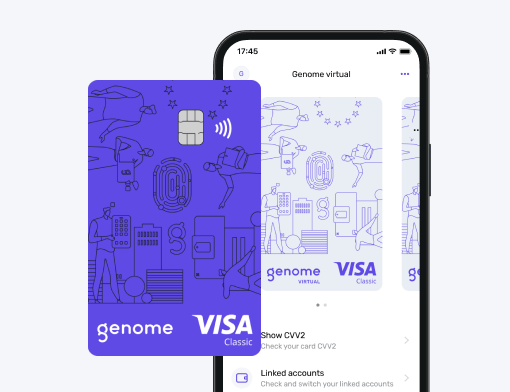
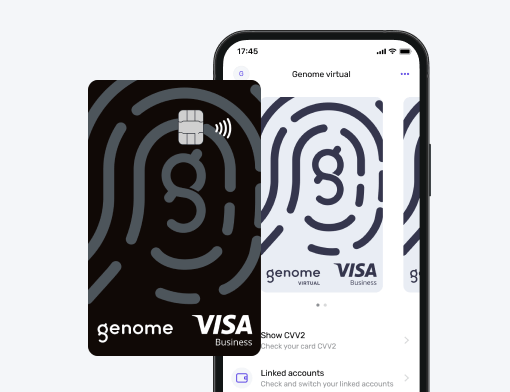
Genome was built with exactly these pain points in mind. Rather than simply relying on SWIFT for every international transfer, Genome routes payments intelligently, selecting the fastest, most cost-effective available path based on the beneficiary’s details, currency, and destination.
The Intelligent Routing System
Our Intelligent Routing System is the core of Genome’s optimization approach. When a transfer is initiated, the system automatically reviews the beneficiary details and determines the most efficient rail available:
For eligible EUR transfers within the SEPA region, Genome can use SEPA or SEPA Instant as a faster, lower-cost alternative to SWIFT – avoiding typical SWIFT correspondent banking fees.
For transfers between Genome users, funds settle internally, with no intermediary costs and near-instant availability.
For transfers that genuinely require SWIFT – such as non-SEPA destinations, non-EUR currencies, and high-value cross-border payments to Asia or North America – Genome uses SWIFT with SHA fee instructions, where the client pays the transfer order fee, and the beneficiary handles charges applied by their bank and any intermediaries.
This isn’t something your finance team has to configure manually for every payment. B2B international payments should be automated.
Multi-Currency business account
Genome currently supports multi-currency accounts in 12 major currencies: EUR, USD, GBP, PLN, CHF, JPY, CAD, CZK, HUF, SEK, AUD, and DKK – covering the major corridors for European businesses operating globally. Businesses can open up to five accounts per currency, which is useful for companies managing separate FX exposures across different subsidiaries, project lines, or supplier categories. It is also very handy for intercompany transfers and international operations.
International business transfers can now reach 161 countries and territories, allowing you to optimize business transfers from Europe to almost any supported country globally.
Open an account
in Genome online
Real-world use cases
International supplier payments: EU to Asia
A typical case of B2B cross-border payments: a European electronics company sources components from manufacturers in Japan. Under a traditional setup, each payment requires a SWIFT wire, two to three intermediary hops, 3–4 business days, and variable fees that make invoice reconciliation messy.
With Genome, the company holds JPY or USD balances in dedicated accounts, initiates payments via the single dashboard, and the Intelligent Routing System handles the rest – routing via SWIFT with transparent SHA fee disclosure. For SWIFT transfers, Genome uses the SHA payment instruction, so the client covers the outgoing transfer fee, while the beneficiary handles charges applied by intermediary and beneficiary banks.
Intercompany transfers: moving liquidity between subsidiaries
A mid-sized SaaS company has subsidiaries in Germany, Poland, and the United States. In this case, the best currency depends on the purpose of the transfer: EUR may work well for euro-denominated group funding, PLN is usually the natural choice for Polish operating expenses, and USD is practical for funding US operations.
Quarterly intercompany transfers – moving surplus EUR from the German entity to fund USD operations in New York – have traditionally required international transfers, currency conversion, and settlement windows that can stretch over several business days.
Moving money to Poland creates a different question: is it better to use zloty, the local currency, euros for SEPA payments, or USD to simplify international business transfers under one currency?
Managing these intercompany transfers internationally through Genome’s multi-currency business account means the German entity can hold euro assets alongside USD and the Polish zloty, with convenient currency conversion and an online calculator for rates.
Contractor settlements: paying in local currency
A UK-based digital agency works with freelance designers in Poland, the Czech Republic, and Sweden. Paying contractors in their local currencies – PLN, CZK, and SEK – rather than forcing every payment through GBP first can improve the contractor relationship. They avoid unnecessary conversion costs or FX markups on their end, while the agency gets more control over when and how currency conversion happens.
In some cases, payment currency also depends on the contractor agreement, local market expectations, or payroll rules if the worker is an employee rather than an independent contractor.
The best way to handle it is a multi-currency business account that supports these currencies natively.
SWIFT vs. SEPA vs. local alternatives: when to use what
The practical decision tree isn’t complicated once you know the options:
Use SWIFT when:
The destination is outside the SEPA region, such as Asia, the Americas, Africa, or the Middle East;
The currency is non-EUR, and there is no local rail service for that corridor;
High-value corporate FX payments require the reach, traceability, and compliance framework of the SWIFT network;
The beneficiary’s bank only accepts SWIFT wires.
Use SEPA when:
Both sender and recipient are within the SEPA region of 41 European countries, including all EU member states, EEA countries, and several non-EU countries and territories;
The currency is EUR;
Speed matters – eligible SEPA Instant payments can settle in under 10 seconds, 24/7.
Use T2 / TARGET services when:
You’re making large-value, urgent EUR settlements between financial institutions within the EU. This is the Eurosystem’s real-time gross settlement system for bank-to-bank EUR payments, used for liquidity management and high-value settlements.
Use Faster Payments (UK) when:
Both parties hold UK bank accounts, and GBP settlement is needed. Faster Payments usually settles quickly and supports amounts up to £1,000,000 per transaction at scheme level, although individual providers may set lower limits.
The challenge for most businesses isn’t knowing these rules in theory – it’s executing them consistently across hundreds of monthly transactions without a dedicated treasury team.
That’s exactly the gap Genome’s Intelligent Routing System closes: the platform matches outgoing international payments to the most efficient available route, so businesses can avoid using SWIFT where a suitable alternative rail is available.
Plus, a multi-currency business account can help handle currency uncertainty.
Make your international business transfers more efficient
B2B cross-border payments are a genuine competitive differentiator. Businesses that optimize their international money transfers reduce costs, shorten supplier payment cycles, and eliminate reconciliation headaches.
Genome’s platform, built with SEPA, SWIFT, and internal transfers support, gives businesses the tools to stay up to date with the latest financial technology and perform corporate FX payments.
The Intelligent Routing System does the optimization work automatically. The multi-currency accounts eliminate unnecessary FX conversions. And the single dashboard gives your team visibility across all your global payment flows and international supplier payments in one place.
Open a business wallet and start optimizing your global operations today.