

The Faster Payments system (sometimes referred to as FPS) is not just a regular payment system, but one of the few UK interbank payment systems that enables payers to make instant payments. Instead of waiting days for transfers, users can send funds instantly, and FPS will process payments the same day. In this guide, we’ll explain what Faster Payments really are, how they work, and how they compare to other systems.
What is the Faster Payments Service (FPS)?
The Faster Payments service is a United Kingdom-based payment system introduced by the UK Payments Council (now Pay.UK) in 2008. From the very beginning, Britain’s financial institutions wanted to establish a system for non-scheduled, immediate payments only. In practice, the service was severely limited by the implementation, as not every bank was willing to adopt it.
Nowadays, FPS allows real-time payments between bank accounts, typically within seconds. A faster payment system supports a wide range of payment types, including personal transfers, business payments, standing order payments, and mobile or online transactions.
Note that Faster Payments can only be sent within the UK and is used to process payments in British pounds (GBP) exclusively.
It’s used by most major UK banks and building societies and supports various payment types, including one-off payments, standing order payments, and even mobile app transfers. Whether you’re using a banking app or desktop portal, chances are your transfer is being routed through this payment system.
Open an account
in Genome online
How do Faster Payments work?
Sending a Faster Payment is simple:
A person initiates a transfer through web banking, a mobile banking app, or telephone banking.
The payment message is sent securely through the Faster Payments system.
The recipient’s bank account is credited within seconds, although it may take up to two hours in some cases.
After that, both the sender and recipient receive confirmation that the payment has been successfully processed. The service operates 24/7, 365 days a year, ensuring payments are processed even on weekends and holidays, allowing anyone to receive faster payments.
Benefits of Faster Payments
Speed is not just a benefit; it is a cornerstone of the Faster Payment System. It usually arrives within seconds and rarely takes more than two hours. It makes it the preferred method for anyone who needs an instant bank transfer in the United Kingdom.
Another major advantage is cost. Most banks and building societies offer Faster Payments free of charge for individuals, while businesses benefit from very low fees compared to high-value systems like CHAPS or SWIFT. Combined with full availability- 24 hours a day, seven days a week, including weekends and holidays- it creates unmatched convenience for anyone.
Security is another important factor. The Faster Payments scheme includes fraud checks and monitoring to protect both payers and recipients, backed by the power of British jurisdiction.
To be clear, the Faster Payments System is operated by a private entity, and the central bank of the United Kingdom – the Bank of England is not a direct participant, but it is responsible for providing final settlement and overseeing the payment system for safety and stability.
The Faster Payments limit
The limit for Faster Payments is £1 million per payment. That’s the upper limit of the Faster Payments infrastructure, but not necessarily what your bank allows.
Each bank or payment provider sets its own limits based on internal risk policies, account type, or even how you access your banking (mobile vs. desktop). For example:
A personal account may allow £25,000 via a mobile app but £50,000 via online banking for single immediate payments.
Business accounts often have higher limits, especially for verified or trusted payees’ accounts.
Digital-first providers like Starling Bank may offer the full £1 million limit for select users.
Bank accounts can impose these limits for various reasons, such as fraud prevention, user verification levels, and transaction history. It’s also common for banks to set daily or aggregate limits, not just per transfer. Some even cap the number of payments you can make in one day.
How the limit affects business transfers
If you have a business, you will likely hit these limits when managing high-value transactions – large supplier payments or recurring international expenses. For example, if your bank has a Faster Payments limit of £100,000 per transaction, a £500,000 payment would require multiple transfers or an alternative route like a CHAPS payment to process payments.
Hitting these Faster Payments limits can delay time-sensitive payments and disrupt supplier relationships. In the worst case, you may not find out about these limits until after a failed transaction attempt on a payment date.
Tips for working within the limit
Plan ahead: If you need to send a large payment, split your Faster Payments transaction across several days or smaller bank transfers.
Use the most flexible channel: Online banking often has higher limits than mobile banking apps – for Faster Payments and other transfer types.
Verify new payees early: Many banks restrict initial transfers to a new account – add and verify your payee in advance.
Double-check payment details: Faster Payments are hard to reverse. Sending money to the wrong account could result in costly delays.
Talk to your bank: For one-off large payments, banks may increase your limit temporarily.
Types of payments processed through Faster Payments
The Faster Payments scheme supports a wide range of payment types, each for different needs:
Single immediate payments: Also known as one-off payments, these are sent instantly and used for transferring funds to family, friends, or suppliers.
Standing orders: Regular payments are sent on scheduled dates, which are ideal for rent, subscriptions, or supplier invoices.
Payments made via mobile banking: These often have preset templates and biometric verification for quick and secure sending.
Online banking transfers: This is still the most common way to send money, especially for larger amounts via desktop portals – and Faster Payments can be used here, too.
Regardless of the payment type you use, the core benefit of the Faster Payments system is speed and reliability. But while the Faster Payments system is fast, it’s also bound by limits that can vary depending on your bank account, sort code, or even the payee.
Faster Payments vs. other payment systems
The Faster Payments system is surely quick and very flexible, but not always the best option; besides, other payment systems are also good enough. For example, BACS payments are commonly used for payroll and bulk processing due to their cost-effectiveness, whereas CHAPS is more suitable for high-value transactions. SEPA and SWIFT also have their upsides, so let’s compare all these big payment services at once.
System | Region | Speed | Typical use case | Limits | Cost |
Faster Payments | UK | Seconds – 2 hrs | Pay bills, online shopping, P2P | Up to £1m | Usually, free or low fee |
BACS | UK | 3 working days | Payroll, supplier payments, standing order | £250,000 per transaction | Low cost |
CHAPS | UK | Same day | High value transactions (corporate deals, final funds for finalizing property purchase) | No upper limit | Higher fees |
SEPA Instant | EU/EEA | Seconds | EU cross-border one off payment | €100,000+ | Low, but depends on a bank |
SWIFT | Global | 1–5 days | International settlements | Varies by each bank | Higher fees plus currency exchange |
How popular is the Faster Payment System?
How popular is the Faster Payment System? In 2024, the FPS processed 5.09 billion transactions with a value of £4.2 trillion, compared to the Eurozone’s shared payments network – SEPA, which in the first half of 2024 had total retail payment transactions in the euro area worth approximately 52.1 billion transactions, valued at €25.1 trillion.
Faster Payments for businesses
Businesses benefit greatly from access to fast-moving and consistent funds.
Use cases: Paying suppliers, processing refunds, payroll, and receiving customer payments.
Advantages: Faster cash flow and improved customer trust.
Limitations: For large, international transfers, systems such as SWIFT or CHAPS may be more suitable, and euro-related payments would be more closely aligned with SEPA regulations.
The cumulative effect of the system enhances cash flow for businesses, enabling them to receive customer payments promptly, settle supplier invoices on time, and issue refunds without delay.
Open an account
in Genome online
What is a CHAPS payment?
CHAPS stands for the Clearing House Automated Payment System, which is used for receiving and sending money within the United Kingdom in GBP only.
The Clearing House Automated Payment System was established in 1984, with its ownership later passing to the Bank of England. Currently, CHAPS payments are a part of the Real-Time Gross Settlement (RTGS) system – they are settled individually in real time rather than being batched.
A CHAPS bank transfer is most beneficial when a client needs to send a large transfer. Moreover, these transfers reach the beneficiary on the same day, which is advantageous for urgent payments.
Notably, CHAPS payments are available inside Genome as part of our international money transfer feature for your business account, but more on that later.
CHAPS vs. Faster Payments
At first sight, CHAPS and Faster Payments are rather similar, as they both work only for payments in GBP currency and are rather quick.
However, Faster Payments have two major advantages over the CHAPS system. For one, they are instant, meaning you can receive Faster Payments within seconds.
Secondly, Faster Payments are processed 24/7, and bank holidays don’t apply. Meanwhile, CHAPS payments are processed only on working days.
Still, Faster Payments have transfer limits (up to £1 million, depending on the bank) and may not support large transfers. Thus, you might want to use it for smaller payments. CHAPS, while reliable, is more costly and typically used for business or critical payments.
Genome’s cross-border payment solutions
Hitting Faster Payments limits or dealing with international suppliers? Genome has a better way to send money. Genome is a licensed electronic money institution that provides financial solutions for businesses that need more flexibility than traditional banks offer.
Send money locally and globally via SEPA Instant and Credit Transfers, SWIFT, and other payment methods.
Why use Genome for business payments?
When you make a payment, Genome uses an Intelligent Routing System to determine which transfer option will be the most efficient and cost-effective for you among SWIFT, CHAPS, Faster Payments, and TARGET2 options.
Simplify international payments: Send and receive cross-border payments using different currencies.
Genome bridges international corporate banking and modern digital financial infrastructure, offering scalable cross-border payment solutions for businesses operating beyond traditional banking limits.
Global payment rails: Send and receive funds seamlessly via international transfers and reach global partners across 160+ countries and territories via international transfer networks.
Mass batch transfers: Streamline payroll, vendor payouts, and contractor settlements by executing up to 3,000 transactions simultaneously in a single submission.
Dedicated IBANs: Open dedicated IBAN accounts completely online with streamlined digital onboarding, eliminating paper-heavy bureaucracy and physical branch visits.
12 supported currencies: Hold and manage up to 5 accounts per currency, covering EUR, USD, GBP, PLN, CHF, JPY, CAD, CZK, HUF, SEK, AUD, and DKK within a single wallet dashboard.
Shared account access: Empower authorized team members, finance managers, or external accountants with shared account access while maintaining granular control through role-based permissions.
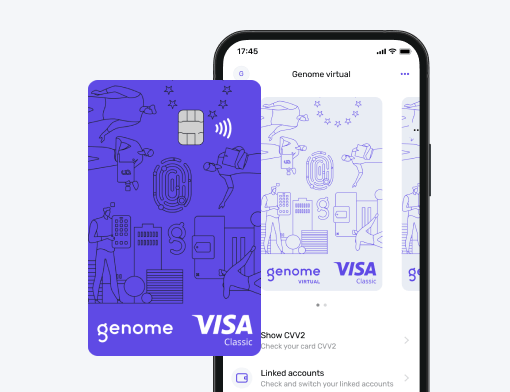
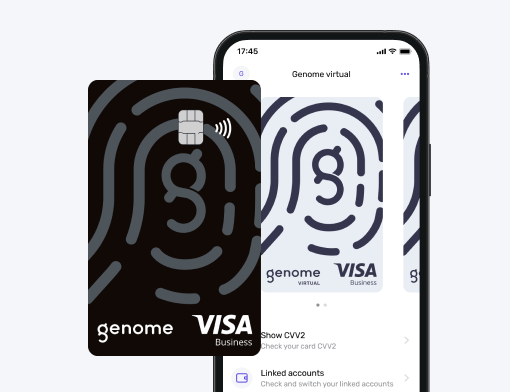
Corporate Visa cards: Issue physical and instant virtual Visa cards with customizable spending limits. Cards link directly to multi-currency account balances for recurring software subscriptions, digital ad spend, and business travel.
Instant payment acceptance: Collect online customer payments through Open Banking (Pay-by-Bank) and SEPA Instant, allowing real-time e-commerce payouts and subscription settlements directly into your account.
EU-regulated safeguards: Operating as a licensed Electronic Money Institution supervised by the Bank of Lithuania, Genome complies with strict PSD2, DORA, GDPR, PCI DSS, and ISO 27001/27701 operational standards.
Open an account
in Genome online
Summary
Faster Payments is great for quick, secure transfers in GBP within the UK – but it’s not without its limits. The £1m Faster Payments limit may sound high, but many banks have their own limits below that. Knowing how your bank works and what limits apply to your account, channel, or payee is key to avoiding delays or failed payments.
If your business is making frequent transactions, large payments, or cross-border payments, a platform like Genome is a more flexible, scalable solution. It takes the stress out of same-day payments, keeps you within limits, and opens up new ways to manage your funds.
Ready to stop worrying about whether your payment will go through? Open a business wallet at Genome today and take control of your transfers.